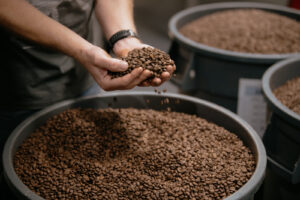
Supply chain transparency isn’t a nice-to-have. For operators running multiple sites, it’s the difference between a coffee programme that holds – and one that doesn’t.
Most operators think about coffee from the espresso machine forward. The grind, the extraction, the milk texture, the cup. What happens before the roastery rarely gets airtime – and that’s exactly where the risk lives.
Green bean sourcing is the foundation of everything: quality, consistency, price stability, ethical credibility, and your ability to scale. If your contract roaster can’t speak fluently to what happens upstream, you have a problem you haven’t discovered yet.
This is what the supply chain actually looks like – and what to demand from any roaster who wants your business.
01 – WHERE COFFEE BEGINS: THE PRODUCING COUNTRIES
Green coffee – unroasted beans – is grown across a narrow band of the globe known as the Coffee Belt, sitting between the Tropics of Cancer and Capricorn. The major producing regions each bring distinct flavour characteristics:
Ethiopia. The birthplace of Arabica coffee. Expect bright acidity, floral aromatics, and fruit-forward complexity – berries, citrus, jasmine. The Yirgacheffe and Sidamo regions are globally celebrated.
Colombia. Consistent, clean, and well-balanced. Colombia’s geography – high altitude, two harvest seasons – produces a reliably sweet, medium-bodied cup that forms the backbone of many commercial blends.
Brazil. The world’s largest producer. Lower altitude growing produces a heavier body, lower acidity, and chocolate, nut, and caramel notes. Essential for espresso blends built for milk-based drinks.
Central America – Guatemala, Honduras, Costa Rica. Bright, structured coffees with good sweetness and clarity. Often used to add complexity and lift to espresso blends.
Asia-Pacific – Indonesia, Papua New Guinea. Earthy, full-bodied, and low-acid. Indonesian coffees in particular add depth and weight to blends designed for high-volume café environments.
For multi-venue operators, understanding origin matters because it directly shapes what’s in your cup – and why your blend tastes the way it does. A roaster who can walk you through this isn’t showing off. They’re demonstrating that what goes into your brand has been thought about seriously.

02 – THE SUPPLY CHAIN: FROM CHERRY TO GREEN BEAN
Before a bean reaches a roaster, it travels through a series of critical processing steps. Each one affects the final cup.
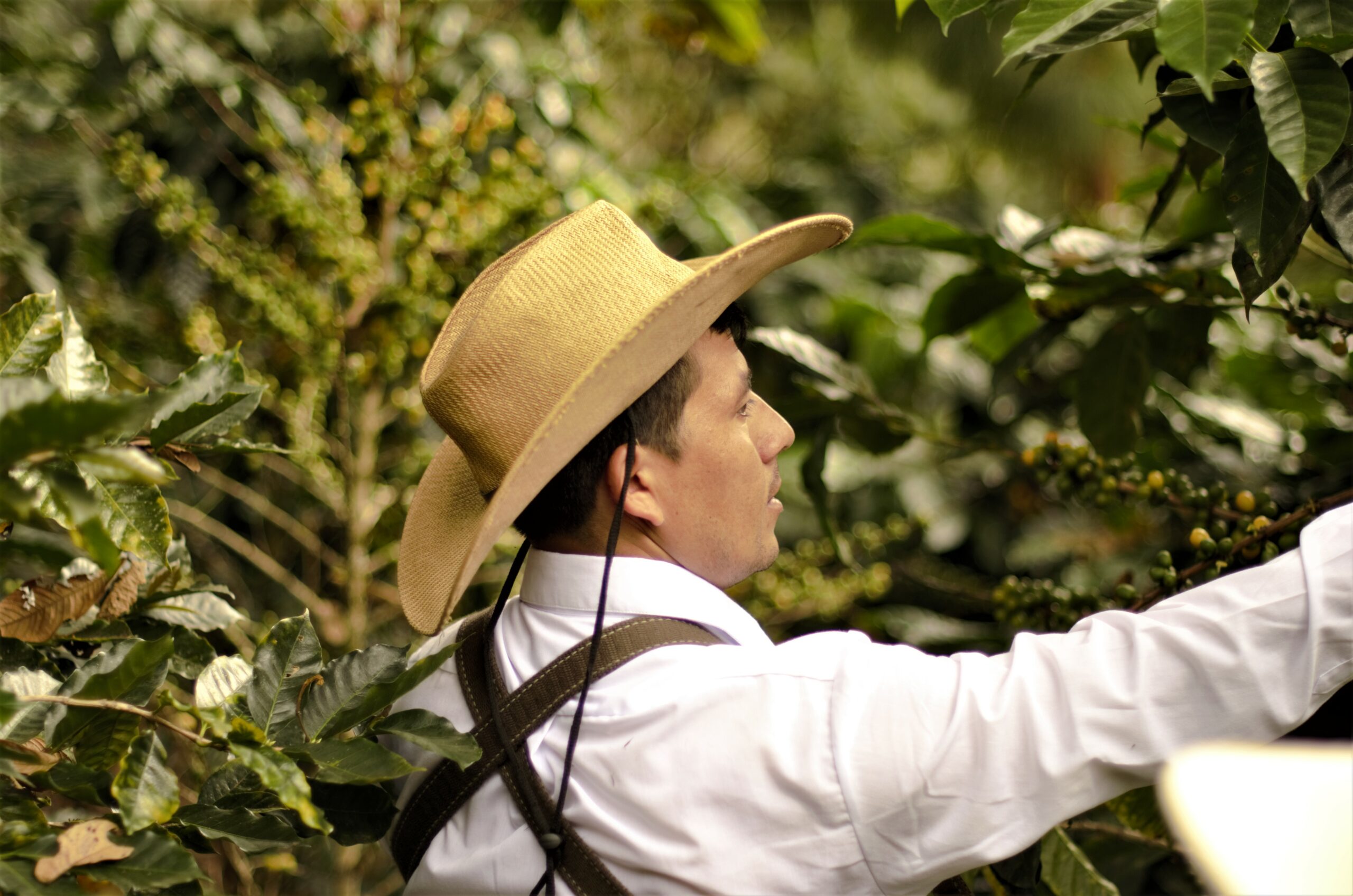
Harvesting. Specialty coffee is picked selectively – ripe cherries only, by hand. Commercial coffee is strip-harvested, taking everything at once regardless of ripeness. The difference shows up immediately in cup quality and consistency.
Processing. Once picked, the cherry must be processed to extract the green bean inside. The three main methods:
- Washed (wet process). The fruit is removed before drying. Produces clean, bright, transparent flavour. The bean’s intrinsic quality is exposed – there’s nowhere to hide defects.
- Natural (dry process). The whole cherry dries in the sun with the fruit intact. Produces fruity, complex, often wine-like flavour. Higher risk of inconsistency if not managed carefully.
- Honey process. A middle path – some fruit is left on the bean during drying. Produces sweetness and body with more clarity than natural processing.
Milling and grading. Processed beans are hulled, sorted, graded by size and density, and assessed for defects. Green bean quality grades vary by country – but specialty grade beans must score 80+ on the SCA’s 100-point scale. Any reputable contract roaster sources to this standard as a minimum.
Export and logistics. Green beans are packed into jute or grain-pro bags (typically 60 kg) and shipped in containers. Transit from origin to Australia is typically 4–10 weeks depending on origin. A roaster with strong forward planning and coverage of supply – ideally 3–6 months of green bean inventory secured in advance – is one that won’t leave your programme exposed to spot market volatility.
03 – GREEN BEAN PRICING: WHY IT’S VOLATILE AND WHAT IT MEANS FOR YOUR BUSINESS
Coffee is one of the most traded commodities on earth. Green bean pricing is driven by the C Market – the New York-based futures exchange for Arabica coffee – and it moves constantly in response to weather events, currency fluctuations, geopolitical instability, and speculative trading.
What’s been happening to prices.
Green bean prices have been under significant upward pressure. Climate events – particularly drought and frost in Brazil, the world’s dominant producer – have driven supply shocks. In 2024 and into 2025, C Market prices reached multi-year highs, putting pressure on roasters globally. For operators locked into fixed pricing with underprepared roasters, this created real problems: surprise price increases, reduced quality as roasters substituted cheaper origins, and in some cases, supply interruptions.
What this means for multi-venue operators.
If your contract roaster is buying spot – that is, purchasing green beans only when they need them, at whatever the market is doing – your pricing and quality are at the mercy of conditions they can’t control. A roaster with a disciplined hedging and forward-buying programme can offer you meaningful price stability, because they’ve secured supply at known prices weeks or months ahead of roasting.
The right questions to ask:
- How far ahead do you secure your green bean supply?
- Do you use forward contracts or futures to hedge against price volatility?
- How do you communicate price changes to partners, and with how much notice?
- What happens to quality if your primary origin becomes unavailable or unaffordable?
A roaster who can answer these questions clearly – with specifics, not generalities – is a roaster managing their business professionally. That professionalism protects yours.
04 – DIRECT RELATIONSHIPS: WHY THEY MATTER MORE THAN MARKETING
“Direct trade” gets used a lot in specialty coffee. Not all of it means the same thing. Here’s what genuine direct relationships actually deliver – and why it matters to you as an operator.
Flavour consistency. When a roaster has a multi-year relationship with a specific farm or cooperative, they have influence over processing standards, harvest timing, and lot selection. That consistency flows directly into your cup. Roasters buying through brokers without established relationships are at the mercy of whatever’s available.
Early access to quality lots. The best micro-lots and single origins are allocated first to roasters with established relationships at origin. If your roaster is connected, you have access to coffees that can genuinely differentiate your brand.
Supply resilience. When weather events or political instability disrupt a producing region, roasters with direct relationships have more visibility, more communication, and more options to navigate disruption than those relying on the spot market.
Ethical credibility. Genuine farm relationships come with transparency – who grew the coffee, what they were paid, what farming practices were used. That’s a story your brand can tell authentically to customers who increasingly care about it.
Price integrity. Direct relationships often involve premiums paid above the C Market – but they also mean predictable, negotiated pricing rather than pure commodity exposure. For a multi-venue operator, predictability is worth more than the cheapest possible green bean price.
05 – QUALITY CONTROL: WHAT HAPPENS AT THE ROASTERY
Even the best green beans require rigorous quality control at the roastery to deliver a consistent cup across every site you operate. Here’s what a professional programme looks like:
Intake assessment. Every green bean shipment should be assessed on arrival – moisture content, density, colour, and physical defect count. Beans outside specification should be quarantined or rejected. This step is non-negotiable for operators who need consistency at scale.
Roast profiling. Specialty roasting isn’t about applying heat until a bean changes colour. It’s about developing a specific roast profile – a precise curve of time, temperature, and airflow – for each origin, each blend, each batch weight. Software like Cropster allows roasters to record, replicate, and audit every roast. If your roaster can’t show you roast profiles, consistency is guesswork.
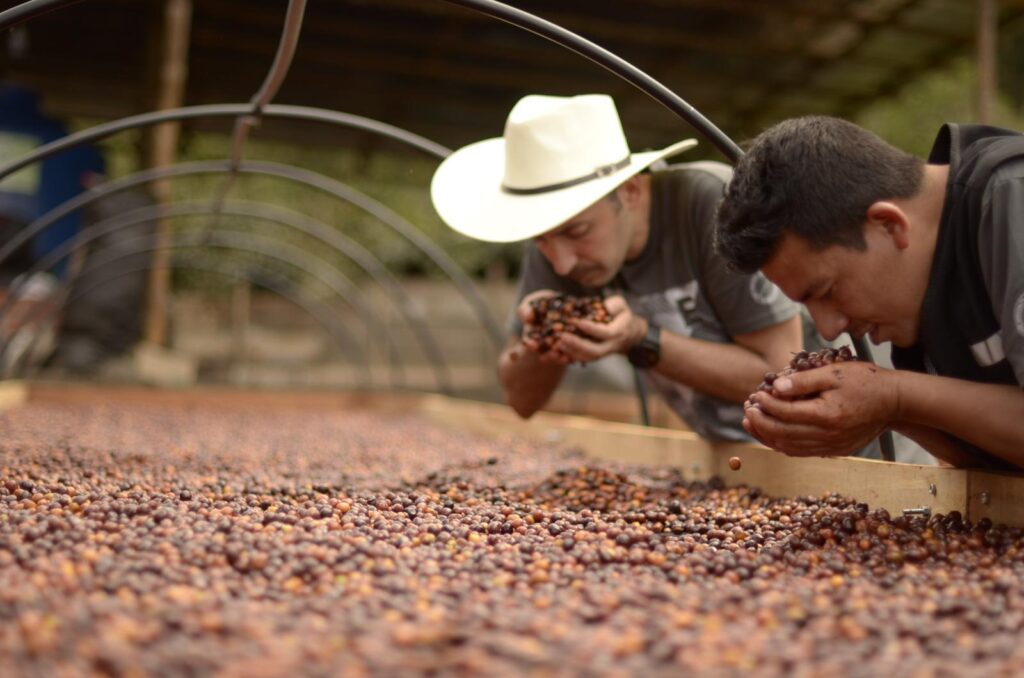
Weekly cupping. A cupping programme – blind assessment of roasted coffee against SCA standards – is the ongoing quality audit that catches drift before it reaches your customers. Ask how often it happens, who participates, and what happens when a batch fails.
Batch traceability. For multi-venue operators, batch traceability means you can identify exactly when and how a coffee was roasted if a quality issue emerges at any site. It’s the difference between a roaster who can pinpoint and solve a problem – and one who shrugs.
06 – CERTIFICATIONS: WHAT THEY MEAN AND WHICH TO PRIORITISE
Certifications aren’t just marketing. For operators supplying hospitality groups, corporate accounts, or retail, they’re increasingly a procurement requirement.
Fairtrade. Sets minimum floor prices and community premiums for farmer cooperatives. Protects growers from the worst C Market crashes. Strong resonance with consumers and corporate buyers.
Organic (ACO certified in Australia). Verifies that coffee was grown without synthetic pesticides or fertilisers and processed without prohibited chemicals. Requires certification of the roasting facility as well as the farm. Increasingly requested by health-focused hospitality and retail operators.
Rainforest Alliance. A comprehensive sustainability standard covering environmental, social, and economic criteria across the supply chain. The frog logo is one of the most recognised sustainability marks globally.
UTZ / SCA grading. The Specialty Coffee Association’s 100-point grading system is the industry standard for quality assessment. Specialty grade (80+) is the minimum baseline for any roaster positioning their product above commercial commodity coffee.
For multi-venue operators, working with a roaster who holds or can access these certifications means you’re not starting from scratch when a major hospitality or corporate client asks about your supply chain credentials.
07 – WHAT TO DEMAND FROM YOUR CONTRACT ROASTER
If you’re running multiple venues, your coffee programme is a meaningful line item – in cost, in customer experience, and in brand reputation. Here’s the standard to hold any contract roaster to:
- Full origin transparency. Country, region, farm or cooperative, processing method, and harvest season for every green bean in your blend.
- Forward supply coverage. At minimum, 8–12 weeks of secured green bean inventory. Ideally 3–6 months with hedging in place.
- Documented roast profiles. Every batch, every roast. Accessible to you on request.
- Regular cupping. Weekly as a minimum. You should be able to attend.
- Clear pricing communication. Minimum 30 days’ notice of any price adjustment, with the commodity data to support it.
- Certification access. Organic, Fairtrade, or Rainforest Alliance – depending on your customer base and procurement requirements.
- A named account manager. Not a general inbox. A person who knows your business, your sites, and your blend.
This isn’t an unreasonable list. It’s the baseline for a roaster operating at a professional level. If the roaster you’re evaluating can’t meet it – or can’t speak confidently to it – that’s your answer.
08 – THE ZEST AND WHITE LABEL APPROACH
Zest Specialty Coffee Roasters has been sourcing, roasting, and supplying specialty coffee since 2009. White Label is the contract roasting arm – built specifically to bring that depth of sourcing expertise to operators who want their own brand without building a roastery.
Our green bean programme is built on direct and near-direct relationships across Ethiopia, Colombia, Brazil, Central America, and the Asia-Pacific. We roast to order, cup weekly to SCA standards, and use Cropster to profile and audit every batch. Our green bean coverage is planned months in advance – which means the volatility in the C Market doesn’t become your problem at short notice.
We’re happy to walk any prospective partner through our current green bean holdings, origin relationships, and roast programme in detail. That transparency is deliberate. It’s how trust gets built.
READY TO TALK SUPPLY CHAIN?
If you’re running multiple venues and your current roaster can’t answer the questions in this article – it’s worth a conversation.